
No US soldier will return alive'; Tehran warns after 8 Iranian troops killed in strikes
 Ananya Ghosh•9 Jul 2026•2 min read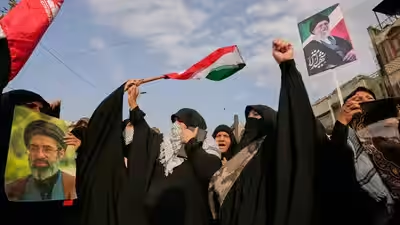
The attacks came during the final days of funeral ceremonies for Iran's Supreme Leader Ayatollah Ali Khamenei, who was killed on February 28. Mourners at the funeral carried "Kill Trump" banners and offered land rewards for his death. The funeral concludes on Thursday.
Iran War News: The US military launched strikes on Iran early Wednesday after accusing Tehran of attacking three ships in the Strait of Hormuz. Washington said the action was part of its response to the alleged attacks and its efforts to prevent Iran from openly selling crude oil on the global market. Iran's IRGC said it carried out a joint missile and drone operation targeting 85 US military facilities in Bahrain and Kuwait in response. The US said it hit more than 80 Iranian military sites, including air defence systems, command-and-control networks and more than 60 IRGC fast attack boats.
President Donald Trump declared the interim memorandum of understanding "over," calling Iranians "scum," "sick people," "vicious" and "cuckoo." He said the US will "probably" hit Iran again tonight. "I don't know if we're going to have a deal. We may just do it without a deal, because you know what, it's easier," Trump said. He also said Iranians are "behaving very badly" but clarified the US does not seek regime change.
Bahrain and Kuwait issued missile alerts on Wednesday morning after Iran claimed responsibility for targeting American military bases in both countries. Kuwait said several power transmission lines were damaged by shrapnel from Iranian attacks, though services remained unaffected. The UAE, Oman and Kuwait condemned Iran's attacks. The IMO chief urged restraint as 6,000 seafarers remain stranded in the Gulf.
Iran's parliament speaker Mohammad Bagher Ghalibaf hit back: "The era of bullying and extortion is over. It leads nowhere. We don't fold." Iran's deputy foreign minister warned the country would "take whatever measures it deems necessary" in response to US strikes. Meanwhile, Trump also revoked a temporary licence allowing Iranian crude oil exports.
The attacks came during the final days of funeral ceremonies for Iran's Supreme Leader Ayatollah Ali Khamenei, who was killed on February 28. Mourners at the funeral carried "Kill Trump" banners and offered land rewards for his death. The funeral concludes on Thursday.
The Middle East crisis continues to unfold on multiple fronts, combining military tensions, diplomatic manoeuvring and growing humanitarian concerns. The latest flashpoint came when two tankers transiting the Strait of Hormuz were reportedly struck by projectiles and caught fire, renewing fears over the security of the vital oil shipping lane through which a significant share of global energy supplies passes. The incidents come despite a fragile pause in hostilities between the United States and Iran and stalled negotiations over Tehran's nuclear programme.
The broader conflict has been shaped by months of escalating confrontation involving Israel, Iran, the United States and Iran-backed groups across the region. The war has triggered repeated attacks on commercial shipping, missile and drone exchanges, and heightened military deployments, while Gaza continues to face a severe humanitarian crisis. At the same time, diplomatic efforts remain active, with Lebanon pursuing a US-backed security framework with Israel, the European Union considering trade restrictions on Israeli settlement goods, and Palestinian leaders pressing Western governments for stronger action against Israel. Together, these developments underscore the volatility of the region, where military incidents, political negotiations and humanitarian challenges continue to evolve simultaneously.