
Bijayini Satpathy’s Trikāyā questions the gendered body
 Shivangi Deshpande•9 Jul 2026•2 min read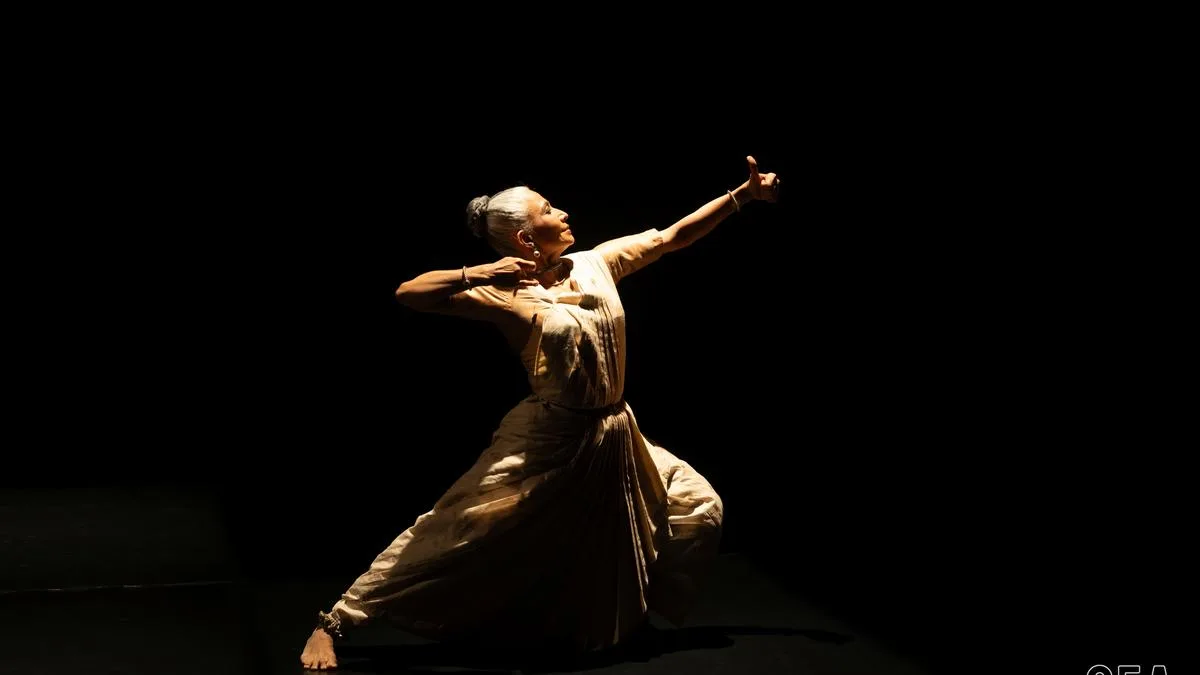
Productions like Trikāyā illustrate how choreography can foster meaningful conversations without sacrificing artistic integrity.
Bijayini Satpathy’s Trikāyā Questions the Gendered Body
Dance has long served as a medium for storytelling, spirituality, and cultural expression. Yet, it is also shaped by traditions that often assign specific gestures, movements, and identities to masculine and feminine bodies. In Trikāyā, acclaimed Indian classical dancer and choreographer Bijayini Satpathy challenges these conventions, inviting audiences to reconsider how gender is embodied, performed, and perceived through movement.
Rather than presenting gender as a fixed identity, Trikāyā explores the body as a fluid, evolving space where tradition and individuality coexist. The performance raises profound questions about whether movement itself has a gender or whether society imposes gendered meanings upon it.
Rethinking Classical Dance Traditions
Indian classical dance forms possess rich vocabularies of expression developed over centuries. While these traditions celebrate both masculine and feminine energies, performers have often been expected to conform to established ideas of gender through costume, posture, facial expression, and movement.
Trikāyā revisits these inherited conventions without rejecting them. Instead, it examines how classical forms can become spaces for dialogue, allowing performers to explore identities that extend beyond rigid binaries.
The Body as a Site of Inquiry
At the heart of the production is the human body—not merely as a performer of choreography but as a subject of philosophical and social inquiry. Every gesture asks whether strength, grace, vulnerability, and power truly belong to one gender alone.
The performance encourages audiences to separate movement from stereotype. A powerful stance need not be exclusively masculine, nor must delicacy be inherently feminine. Dance becomes a language through which the body expresses a fuller range of human experience.
Tradition Meets Contemporary Thought
One of Trikāyā's greatest strengths lies in its ability to remain rooted in classical aesthetics while engaging with contemporary conversations about identity and inclusion.
Rather than treating tradition as static, the work demonstrates that classical art forms possess the flexibility to evolve alongside changing social realities. Innovation emerges not through abandoning heritage but by discovering new meanings within it.
Beyond Gender
Although the performance centres on questions of gender, its themes resonate more broadly. It explores identity, transformation, self-awareness, and the relationship between the individual and society. The choreography invites viewers to reflect on how cultural expectations shape not only gender but also personal expression and belonging.
In doing so, Trikāyā becomes more than a dance performance—it becomes a philosophical exploration of what it means to inhabit a human body.
The Role of Contemporary Choreography
Contemporary interpretations of classical dance increasingly seek to address present-day social issues while preserving technical excellence. Productions like Trikāyā illustrate how choreography can foster meaningful conversations without sacrificing artistic integrity.
Such works expand the relevance of classical dance, attracting audiences interested not only in aesthetic beauty but also in ideas, dialogue, and cultural reflection.
Art as Conversation
Art rarely provides definitive answers. Instead, it creates space for questioning, interpretation, and empathy. Trikāyā exemplifies this role by encouraging audiences to reconsider assumptions about gender and embodiment through the universal language of movement.
Its significance lies not in prescribing how gender should be understood but in opening a space where multiple perspectives can coexist.
Conclusion
Bijayini Satpathy's Trikāyā demonstrates that classical dance can be both deeply rooted in tradition and boldly contemporary. By questioning the notion of the gendered body, the work expands the expressive possibilities of movement while inviting audiences to reflect on identity beyond conventional categories.
In an era of evolving conversations around gender and representation, Trikāyā reminds us that art is most powerful when it challenges assumptions, encourages dialogue, and reveals the shared humanity that exists beyond labels.